
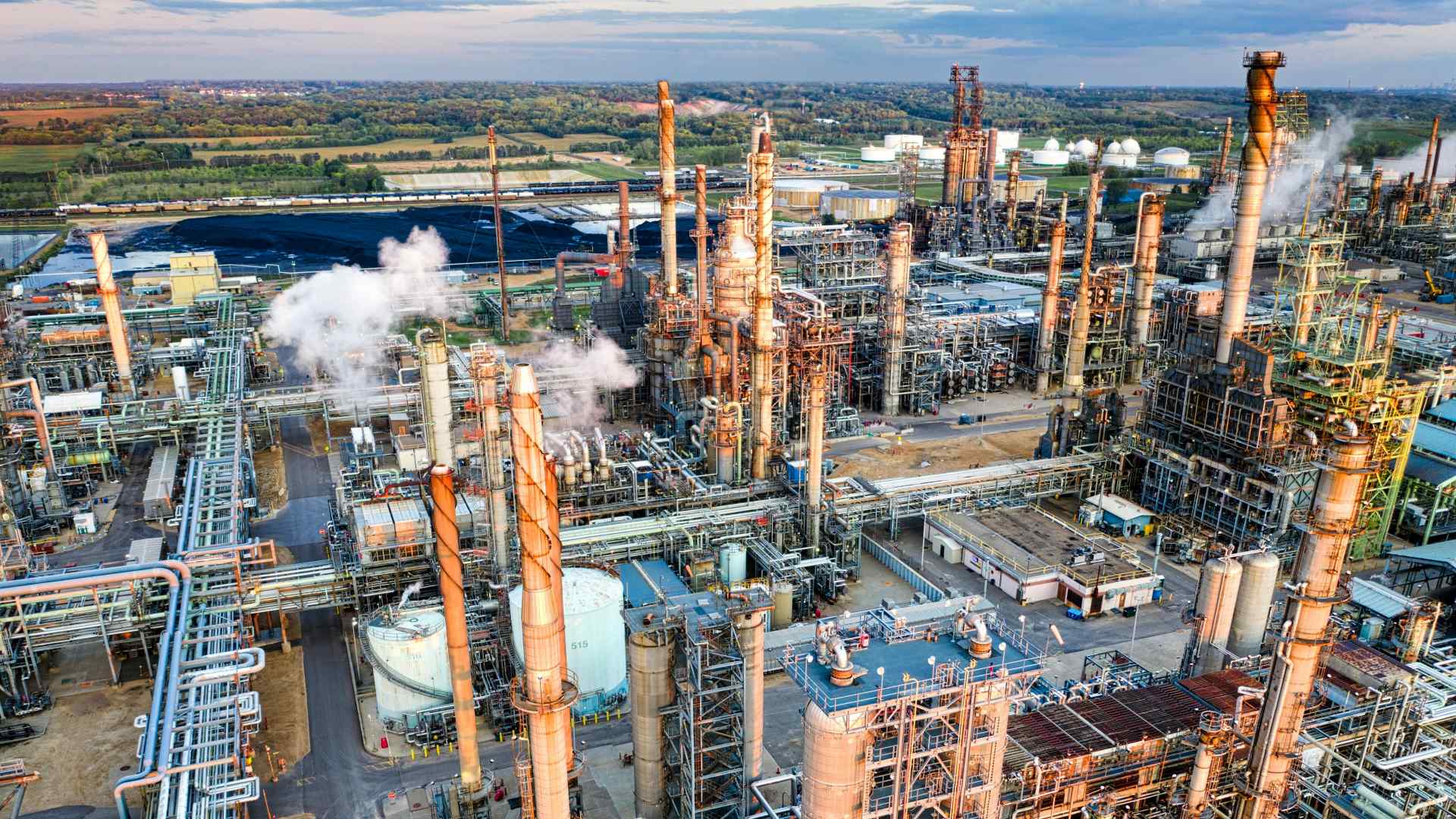
Walk through any chemical processing facility, and you’ll witness an intricate dance of precision engineering, advanced chemistry, and human expertise. But beneath the gleaming equipment and sophisticated control systems lies a critical foundation that often goes unnoticed until something goes wrong: the infrastructure that contains, supports, and protects every aspect of the operation.
In an industry where a single containment failure can halt production, threaten worker safety, and impact entire communities, maintenance isn’t just about keeping things running — it’s about upholding our responsibility as stewards of both industrial excellence and environmental protection.
When Containment Becomes Critical
Every chemical processing facility tells a story through its containment systems. These aren’t just concrete barriers and protective coatings; they’re the silent guardians standing between hazardous processes and the environment beyond the facility walls. The challenge lies in maintaining these systems while operations continue around the clock, often in conditions that would destroy conventional materials in weeks.
Consider the humble sump — a component most people never think about, yet one that bears enormous responsibility. These collection points sit perpetually wet, constantly exposed to whatever chemicals might spill or leak nearby. Traditional protective coatings become saturated over time, gradually losing their effectiveness until the underlying concrete begins to deteriorate. By the time visible damage appears, the repair becomes exponentially more complex and costly.
The evolution toward polymer concrete solutions represents more than just a material upgrade; it’s a fundamental shift in how we approach long-term asset protection. Products like Euclid EucoRepair V100 and Tamms Structural Mortar provide the foundation for repairs that must withstand constant chemical exposure, while unlike coatings that can saturate and fail, these materials provide inherent chemical resistance that doesn’t degrade over time. This isn’t just about avoiding repairs, it’s about building systems that maintain their integrity decade after decade.
✨ Not finding the answers you need?
We know every maintenance problem is unique. That’s why we’re here to answer all of your questions about chemical processing.
The Ripple Effect of Smart Design Decisions
Some of the most impactful maintenance decisions happen before the first piece of equipment is installed. When designing new containment areas, the choice between traditional joint sealants that require regular maintenance and poured-in-place chemical-resistant seals might seem like a minor detail. Yet this single decision can determine whether maintenance teams will spend countless hours resealing joints every few years or focus their attention on more critical tasks.
Advanced joint sealing solutions like Ceilcote EJ-3 Elastomeric Joint Sealant and Sika Duoflex accommodate structural movement while providing robust chemical barriers, even under the constant stress of heavy equipment traffic. The initial investment pays dividends not just in reduced maintenance costs, but in the confidence that comes from knowing your containment system won’t compromise operational reliability.
The same forward-thinking approach applies throughout the facility. Process floors that incorporate proper slopes toward drains during construction prevent chemical pooling that could overwhelm protective systems. When repairs become necessary, specialized products like Euclid E3 Flowable Epoxy Grout ensure that the fixes can withstand the same demanding conditions that caused the original damage. Pump foundations designed with chemical-resistant materials like Stratarock Vinyl Ester Polymer Concrete from the start eliminate the vibration and misalignment issues that plague facilities where equipment stability was treated as an afterthought.
Real-World Maintenance in an Imperfect World
Here’s where theory meets reality: maintenance solutions that work in laboratory conditions often fail spectacularly when applied under the time pressures, resource constraints, and operational demands of actual industrial facilities. The most effective maintenance strategies acknowledge these real-world limitations and work within them rather than against them.
Take tank maintenance, for example. When a weld crack appears, the textbook solution might involve shutting down the tank, draining it completely, and performing traditional welding repairs. But what happens when that tank contains materials that can’t be easily moved, or when production schedules don’t allow for extended downtime? This is where products like Sylmasta Industrial Metal Rapid 5 Minute Epoxy Paste shine — providing effective repairs that can often be completed while tanks remain in service, minimizing operational disruption while delivering long-term reliability.
Tank chime areas, where walls meet the base, present unique challenges that require specialized attention. Solutions like Euclid Duralkote 240 provide the chemical resistance needed in these high-stress zones, preventing small issues from escalating into major structural problems that could compromise entire storage systems.
The same pragmatic approach applies to warehouse floors and high-traffic areas, where the daily reality of forklift traffic, pallet movement, and inevitable spills creates conditions that quickly overwhelm basic protective coatings. These zones demand filled coating systems that can absorb impacts while maintaining their protective properties. When facilities invest in robust solutions like Stratarock Novolac Coating or Stratarock Epoxy Sealer, they’re recognizing that industrial facilities aren’t museums — they’re working environments where durability must coexist with operational demands.
Safety as the Foundation of Everything
In chemical processing, safety isn’t just another consideration — it’s the lens through which every maintenance decision must be viewed. This perspective transforms routine maintenance from a cost center into a critical investment in worker protection and community safety.
Loading and unloading areas exemplify this philosophy in action. These zones experience inevitable spills from transfer hoses and equipment seals, creating slip hazards that could result in serious injuries. Non-slip coatings engineered for chemical exposure don’t just prevent accidents; they demonstrate a commitment to worker safety that extends beyond minimum compliance requirements. The same Euclid Duralkote 240 and Stratarock Epoxy Sealer systems that protect against chemical damage also provide the traction needed to keep workers safe in challenging conditions.
Similarly, the joint sealants protecting high-traffic areas must withstand not only the mechanical stress of constant truck and forklift movement but also potential chemical exposure from spills. Advanced elastomeric materials like Sika Duoflex and Ceilcote EJ-3 that maintain their flexibility and chemical resistance under these demanding conditions provide the kind of reliable protection that safety-conscious facilities demand.
The Economics of Proactive Maintenance
The financial case for strategic maintenance investments becomes clear when viewed through the lens of total cost of ownership rather than initial purchase price. Acid-proof concrete systems cost more upfront than standard concrete with protective coatings. However, their inherent chemical resistance eliminates the ongoing costs of coating maintenance and replacement while providing superior long-term protection.
This economic model extends throughout the facility. When maintenance teams address stress concentration points with appropriate materials before they become major structural issues, they prevent the catastrophic failures that could sideline entire production lines. Process floor repairs that use advanced materials to maintain proper drainage prevent chemical pooling that could overwhelm containment systems and create environmental liabilities.
The key is matching the right solution to the specific challenge. Stratarock Vinyl Ester Polymer Concrete offers unmatched chemical resistance for the most demanding applications, while products like Euclid E3 Flowable Epoxy Grout provide reliable performance for equipment grouting and structural repairs. Each product serves a specific purpose in the larger strategy of protecting facility infrastructure while maintaining operational efficiency.
Building for the Future We Want
The chemical processing industry stands at an inflection point where operational excellence, environmental stewardship, and economic sustainability must work together rather than compete against each other. The maintenance strategies we choose today determine not just the reliability of our current operations, but the legacy we leave for future generations.
This means embracing solutions that reduce environmental impact while improving operational reliability. When facilities choose products like Sylmasta rapid-cure epoxy systems for emergency repairs, they’re not just fixing immediate problems — they’re minimizing downtime and reducing the environmental impact of extended shutdowns. When they invest in comprehensive coating systems that extend infrastructure life, they’re reducing waste through improved durability.
Most importantly, it means recognizing that every maintenance decision — from the polymer concrete protecting a sump to the non-slip coating safeguarding a loading dock — contributes to the larger mission of responsible industrial stewardship. Whether it’s Ceilcote joint sealants maintaining containment integrity or Stratarock protective systems preserving structural soundness, each product and application plays a role in the larger ecosystem of facility protection.
The most successful chemical processing facilities understand that infrastructure maintenance isn’t about fixing what’s broken; it’s about building systems robust enough to support decades of safe, efficient operation while protecting the communities and environments that depend on our industry’s continued excellence.
When we get this right, the result is more than just reliable operations — it’s the foundation for an industry that serves society while honoring our responsibilities to worker safety, environmental protection, and operational excellence. That’s a legacy worth building, one maintenance decision at a time.
Need Help Choosing the Waterstop?
We’re here to answer all of your questions about waterproofing, product compatibility, and application techniques. Get expert guidance for your specific project needs.
Professional Grade Products
Quality Customer Service
Technical Support