
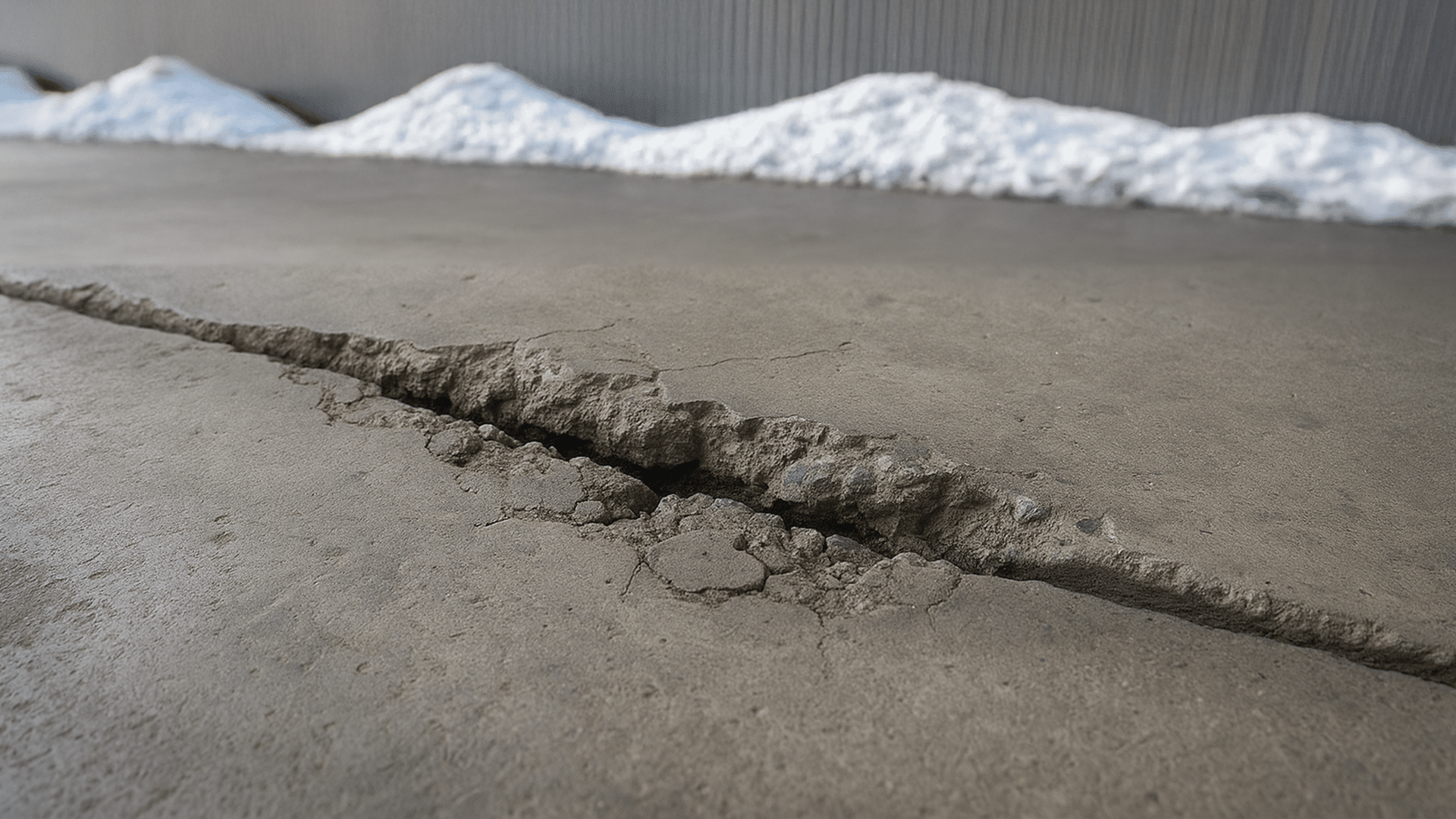
When the temperature gauge starts dropping, facility managers face a crucial decision about concrete repairs. Do you rush to complete that warehouse floor patch before the freeze hits, or wait until spring? Understanding how cold weather affects concrete repair can save your facility thousands of dollars and prevent safety hazards that develop over winter.
Industrial concrete takes a beating year-round, but winter conditions create unique challenges that can turn minor repairs into major headaches. With the right approach and materials, you can successfully repair concrete even when temperatures are less than ideal.
Why Cold Weather Changes Everything
Concrete repair creates a permanent bond between new and existing materials that must withstand thermal cycling, heavy loads, and chemical exposure. Cold weather disrupts this process in ways that many facility teams may overlook.
Temperature affects the fundamental chemistry of repair materials. Most concrete repair products rely on chemical reactions to cure and develop strength. When temperatures drop below 40°F, these reactions slow dramatically. Below freezing, they can stop altogether or produce weak, chalky repairs that fail within months.
Winter conditions also bring higher humidity, shorter daylight hours for outdoor work, and constant precipitation threats that can ruin freshly placed repairs. Indoor repairs in unheated warehouses and manufacturing areas experience temperature swings that stress materials during their critical curing period.

Five Star Structural Concrete
Five Star Structural Concrete is a high early strength, single component, permanent concrete repair material. Five Star Structural Concrete produces a repair which is dimensionally stable, develops an integral bond to existing concrete, and restores structural integrity within hours of placement.
The key difference between successful repairs and failures often comes down to understanding these limitations and adapting your approach accordingly.
Concrete Problems That Can’t Wait for Spring
Not every concrete issue requires immediate attention, but some problems accelerate rapidly in cold weather. Knowing which repairs to prioritize helps you allocate resources effectively.
Spalling and Scaling in High-Traffic Areas
Loading docks, warehouse floors, and manufacturing areas with heavy equipment traffic are particularly vulnerable to freeze-thaw damage. Water penetrates existing small cracks, expands when it freezes, and creates larger cracks that eventually lead to concrete spalling where surface chunks break away.
These areas pose immediate safety risks to personnel and equipment. A forklift hitting a concrete spall can damage both vehicle and operator, while pedestrians face trip hazards that worsen with each freeze-thaw cycle. The challenge is that high-traffic areas require materials that cure quickly and achieve high strength in suboptimal conditions.
Structural Cracks That Allow Water Infiltration
Small cracks that seem cosmetic in summer become serious problems when water freezes inside them. The expansion force can enlarge cracks significantly in just one winter season. In structural elements like columns, beams, or load-bearing walls, this damage can compromise building integrity.
Even non-structural cracks deserve attention if they allow water infiltration affecting operations. Manufacturing facilities with moisture-sensitive processes or warehouses storing humidity-sensitive products need prompt repairs.
Joint Failures in Expansion and Control Systems
Industrial facilities rely on expansion joints and control joints to accommodate building movement from thermal changes and settling. Joint failures accelerate in winter because temperature differentials between day and night, or heated and unheated areas, increase building movement beyond what failed joints can accommodate.
✨ Looking for other cold weather preparations?
This is part of a larger guide that covers more than just concrete repair. Check out our cold weather maintenance overview to learn how to best maintain you HVAC and building envelopment systems.
Material Selection and Temperature Requirements
Understanding temperature limitations is crucial for successful cold weather applications. Different products have different thresholds, and choosing incorrectly almost guarantees failure.
Temperature Thresholds and Product Categories
Most standard concrete repair mortars require minimum temperatures of 40°F for both ambient air and substrate. Heavy-duty applications often require 50°F or higher. These aren’t suggestions but chemistry requirements for proper curing and strength development.
Fast-set products designed for cold weather can often be applied at lower temperatures, but require careful preparation and typically cost more. The trade-off between material cost and application window often makes sense for critical repairs that can’t wait.
Temperature requirements also apply to the substrate being repaired. Concrete exposed to freezing temperatures can take hours or days to warm sufficiently for proper bonding, particularly important for thick sections like foundation walls or equipment pads.
Cold Weather Product Options
Fast-set polymer-modified mortars achieve working strength in hours rather than days, reducing exposure time to temperature fluctuations. Some include integral antifreeze additives allowing curing even below normal minimums.
Epoxy-based repair materials often perform better in cold conditions than cement-based products because they rely on chemical reactions that are less temperature-sensitive. However, epoxies cost more and require more careful surface preparation.
Repair thickness influences material selection. Thin repairs (less than 1/4 inch) are more susceptible to temperature effects and often require specialized materials. Thick repairs may generate heat during curing, which can help in cold conditions but requires temperature monitoring to prevent thermal shock.

Stratarock High Build Repair
High Build Repair is a high performance 100% solids epoxy repair that can be used to restore concrete creating a high strength, impact and wear resistant surface. This material provides excellent chemical resistance and has superior bonding properties.
Understanding Extended Cure Times
Even cold weather materials cure slower as temperatures drop. A 4-hour cure time at 70°F could extend to 8-12 hours at 40°F. This means longer protection periods and greater risk of weather exposure before repairs reach sufficient strength.
Planning for extended cure times is essential for scheduling repairs in operational facilities. Areas needing quick return to service may require heated enclosures or faster-curing alternatives.
Application Best Practices for Cold Conditions
Successful cold weather repair requires modified preparation, application, and protection techniques beyond just material selection.
Surface Preparation Challenges
Cold concrete surfaces present unique preparation challenges. Frost, ice, or high humidity can prevent proper bonding between repair materials and existing concrete. Surface temperature must be at least 5°F above the dew point to prevent bonding-interfering condensation.
Mechanical preparation methods like grinding or scarification work well in cold conditions, but chemical preparation may be less effective because reaction rates slow down. Water-based cleaning agents can freeze on surfaces, creating problems rather than solutions.
For outdoor repairs, timing becomes critical. Mid-morning often provides the best combination of adequate temperature and dry surface conditions, as starting when surfaces are coldest isn’t always optimal.
Modified Application Techniques
Cold weather application requires adjusted methods. Mix smaller batches more frequently to ensure materials stay within their working time window. Using warm (but not hot) mixing water helps maintain workability, but shouldn’t exceed manufacturer recommendations.
Application tools may need preheating in very cold conditions to prevent materials from stiffening too quickly during placement. Heated enclosures around repair areas provide better temperature and humidity control but require careful ventilation to prevent condensation.
Working time becomes more critical because materials may stiffen quickly once placed, even if they cure slowly. Have all tools and materials ready before mixing, and work efficiently during placement.

Adhesives Technology CRACK-Kit
Adhesives Technology CRACK-Kit contains everything needed to structurally repair 8-10 feet of crack. Reliable high strength contractor grade formulas. Convenient packaging and easy to follow instructions. The kit includes Crackbond LR-321 and Miracle Bond 1310, as well as ports, mixing nozzles, injection tubes and gloves.
Protection During Curing
Curing protection is the most critical success factor. Newly placed repairs must be protected from freezing for at least 24-48 hours, depending on materials used. This often requires temporary heating or insulating blankets.
Wind protection is equally important because moving air accelerates moisture loss and heat transfer, both compromising repairs. Simple windbreaks from plastic sheeting or plywood can significantly improve conditions without heated enclosure expense.
Moisture protection prevents rain or snow damage to fresh repairs while preventing excessive drying that causes shrinkage cracking. Balance these requirements using breathable protection materials rather than impermeable plastic films.
When to Bring in Professional Help
Some repairs are suitable for facility maintenance teams, while others require specialized expertise and equipment. Understanding the difference prevents costly mistakes.
Complex Structural Repairs
Any repair involving structural concrete elements should be professionally evaluated. This includes columns, beams, foundations, or load-bearing walls where repairs must carry structural loads. Cold weather adds complexity because cure times are extended and strength development may be unpredictable.
Professional contractors access specialized materials and equipment impractical for most facility operations: heated mixing equipment, temperature monitoring systems, and heated enclosures for large repairs.
Large Area Repairs and Emergency Situations
Repairing substantial flooring sections or equipment pad areas requires coordination and equipment beyond typical maintenance capabilities. These repairs often need multiple material batches, specialized placement equipment, and careful timing for uniform results.
Emergency repairs requiring quick completion in cold conditions often benefit from professional expertise. Contractors experienced in cold weather applications can mobilize specialized materials and equipment for successful repairs in challenging conditions.
The cost of professional repairs must be weighed against repair failure costs and operational downtime impact. For critical areas that can’t afford failures, professional installation often represents better value despite higher upfront costs.
Strategic Planning for Cold Weather Success
Effective cold weather concrete repair starts with planning well before temperatures drop. Understanding your facility’s specific needs and developing appropriate strategies ensures successful, cost-effective repairs.
Facility Assessment and Prioritization
Identify concrete areas most vulnerable to cold weather damage and most critical to operations. Equipment pad areas, high-traffic manufacturing floors, and structural elements around critical machinery should be prioritized. Document existing conditions with photos and notes about crack locations, spalling areas, and joint conditions.
This assessment helps plan repair sequences and material requirements before cold weather arrives while identifying which repairs can wait for better conditions.
Material and Equipment Readiness
Specialized cold weather products may not be readily available from local suppliers. Planning ahead ensures appropriate materials are on hand when repairs become necessary.
Consider investing in temperature monitoring equipment and protection materials like insulating blankets or portable heaters. These tools can differentiate between successful repairs and failures, particularly for facilities in regions with severe winter weather.
Temperature Decision Protocols
Develop clear protocols for when different repair types can proceed based on temperature conditions. Written guidelines ensure consistency and prevent poor decisions during high-pressure emergency situations.
Protocols should include minimum temperatures for different materials, required protection measures, and decision criteria for waiting versus proceeding with emergency repairs.
Making Cold Weather Repairs Work
Cold weather concrete repair doesn’t require compromising quality for timing. With proper planning, appropriate materials, and correct application techniques, you can achieve durable repairs even in challenging conditions.
Understanding that cold weather repair is a specialized application requiring modified approaches is key. Materials, techniques, and protection measures all need temperature-appropriate adjustments, but results can be just as durable as warm weather repairs when done correctly.
Start by honestly assessing which repairs are truly necessary before spring and which can wait. For urgent repairs, invest in appropriate materials and protection measures rather than trying to make standard materials work in unsuitable conditions.
Your facility’s concrete infrastructure is too important to compromise with inadequate repair approaches. For complex repairs or situations where failure isn’t acceptable, professional expertise provides the best path to long-term success.