About Sika Greenstreak PVC Retrofit Waterstop
Sika Greenstreak PVC retrofit waterstop is specified for joints where new construction meets an existing concrete structure — applications where a traditional embedded waterstop isn’t possible because one side of the joint is already cast. Instead of being placed between two pours, retrofit profiles anchor mechanically to the face of the existing concrete using a stainless steel batten bar and anchor bolts, with a structural epoxy gel forming the seal between the PVC and the existing substrate. The opposite flange is then embedded in the new concrete as it’s placed, creating a continuous diaphragm intended to prevent the passage of liquid through the joint.
This approach makes retrofit waterstops the standard solution for tying new concrete into existing tanks, vaults, retaining walls, tunnels, and treatment facility structures. Per Sika literature, retrofit systems can be suitable for moving joints in addition to non-moving applications, depending on the profile and project requirements. Retrofit waterstops ship as a complete system — PVC profile, stainless steel batten bar, stainless steel anchor bolts, and a recommendation for Sika 7300 structural epoxy gel (sold separately). The product line spans four profiles in widths from 3 inches up to 9 inches, with the appropriate size depending on the project’s hydrostatic head pressure, expected joint movement, and existing concrete condition.
Typical Applications
✓Commonly Specified For
- Joints where new concrete meets existing structures
- Tank, vault, and basin expansions and additions
- Water and wastewater treatment plant retrofits
- Retaining wall extensions and tie-ins
- Below-grade foundation restoration projects
- Tunnel and culvert tie-ins to existing structures
- Both vertical and horizontal joint transitions
- Containment structures requiring leakage prevention
→Other Profiles May Be Considered When
- Both sides of the joint will be cast new — see embedded profiles such as Ribbed Centerbulb
- The application is a slab-on-grade joint in new construction — see Base Seal
- A hydrophilic strip-applied seal is preferred — see Hydrotite CJ
- A re-injectable hose system is preferred — see SikaFuko VT-1
- The existing concrete is in poor condition or can’t support mechanical anchoring
Profile selection should always be verified against project specifications and engineering requirements. Contact us if you’d like assistance reviewing options for your application.
Available Sizes: Profiles 581, 609, 655, and 667
Sika Greenstreak produces retrofit waterstop in four profile sizes to suit different joint widths, hydrostatic head conditions, and existing structure geometries. Each system ships with stainless steel batten bar and anchor bolts; Sika 7300 structural epoxy gel is required and sold separately.
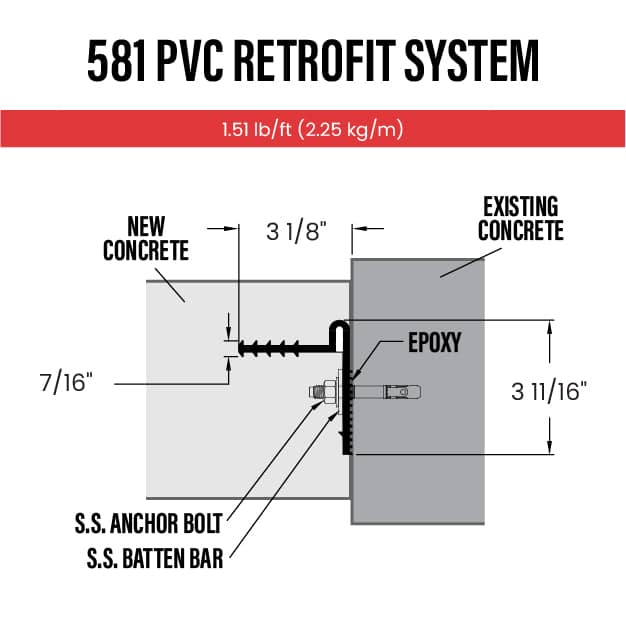
Profile 581
Profile Width: 3 11/16″
Base Width: 3 1/8″
Anchor Flange: 7/16″
Weight: 1.51 lb/ft with hardware
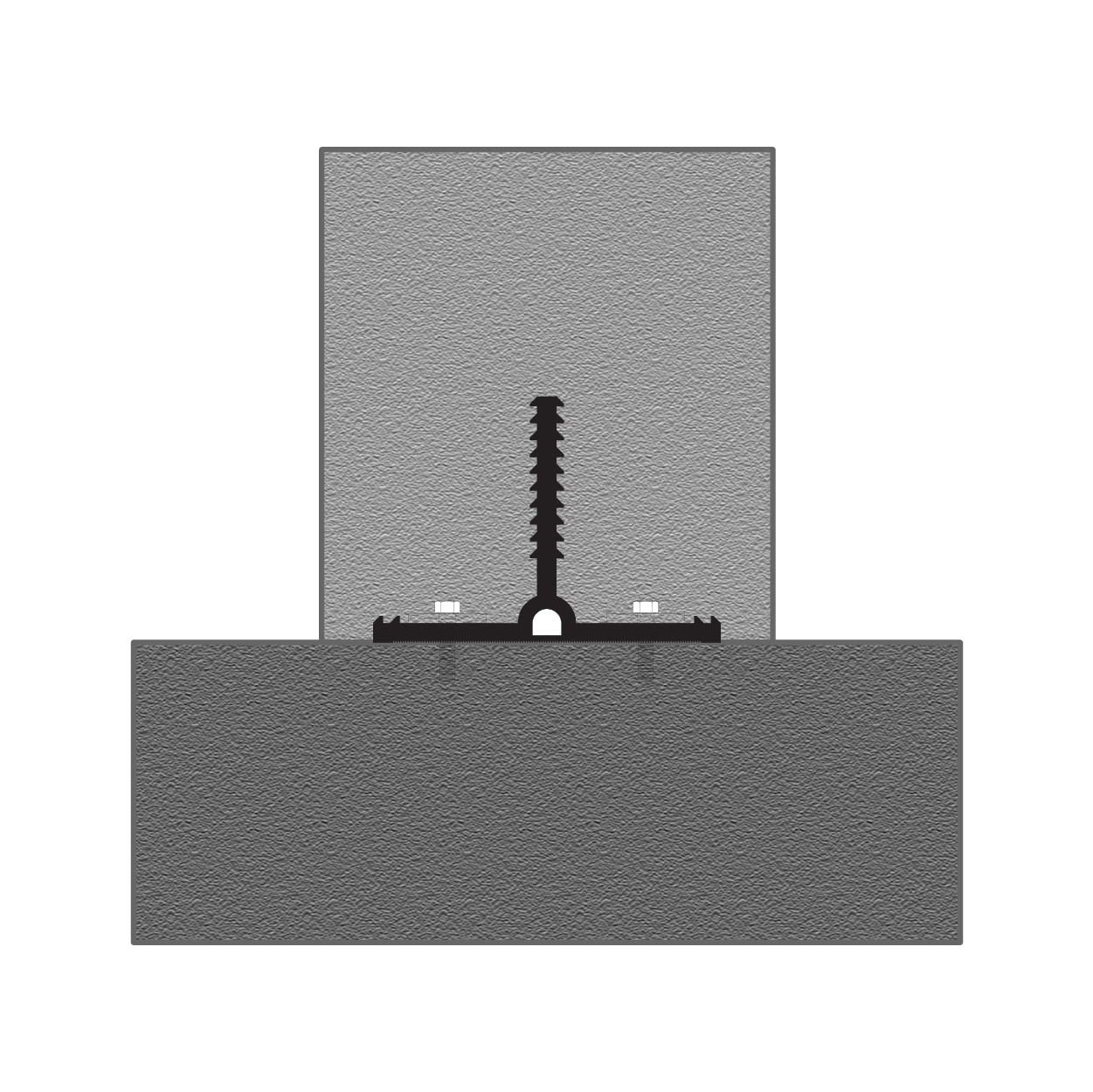
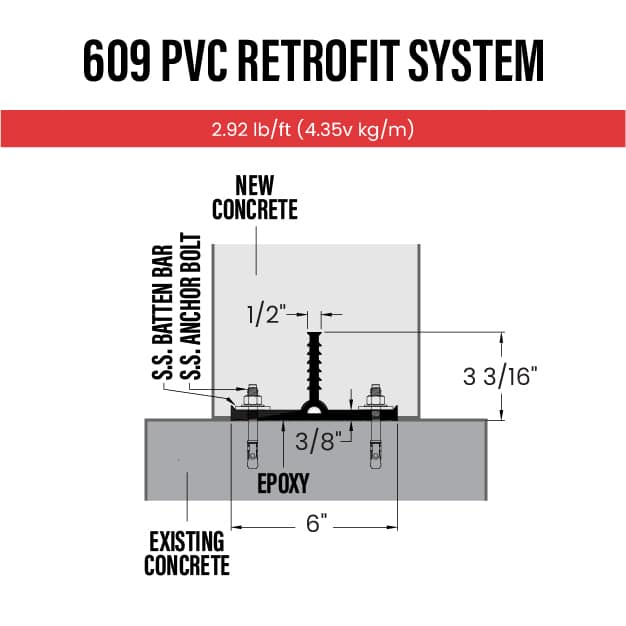
Profile 609
Profile Width: 6″
Base Width: 3 3/16″
Anchor Flange: 3/8″ / 1/2″
Weight: 2.92 lb/ft with hardware
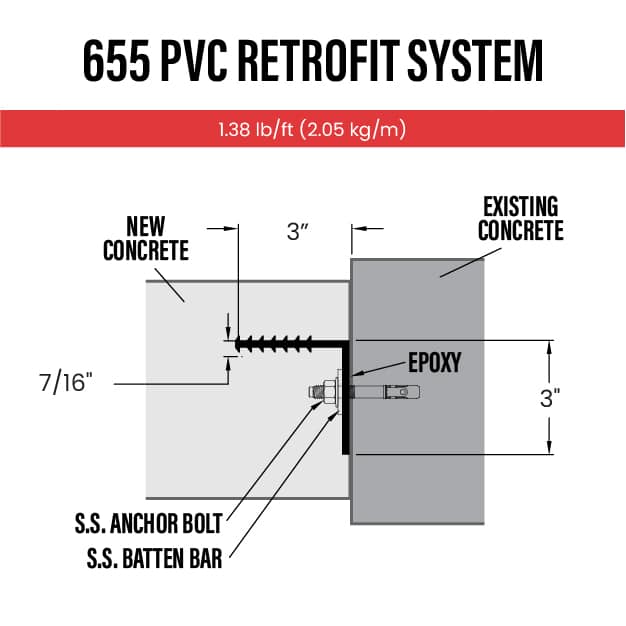
Profile 655
Profile Width: 3″
Base Width: 3″
Anchor Flange: 7/16″
Weight: 1.38 lb/ft with hardware
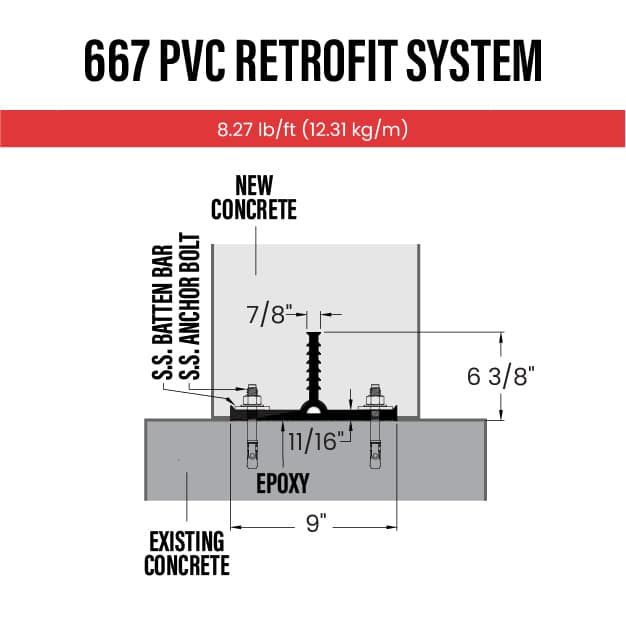
Profile 667
Profile Width: 9″
Base Width: 6 3/8″
Anchor Flange: 7/8″ / 11/16″
Weight: 8.27 lb/ft with hardware
Sizing considerations generally include hydrostatic head, expected joint movement, and the condition and geometry of the existing concrete. Contact us if you’d like help cross-referencing a profile against your spec.
PVC Retrofit Waterstop Installation Overview
Retrofit waterstops install differently than embedded profiles. The PVC is mechanically anchored to the existing concrete face using a stainless steel batten bar and anchor bolts, with a bed of structural epoxy gel (Sika 7300) forming the seal between the PVC and the substrate. The opposite flange is left exposed to be embedded in the new concrete during the subsequent pour. Heat welding is the recognized method for splicing PVC waterstop, and factory-fabricated transitions are strongly recommended at changes of direction. Always refer to the manufacturer’s installation guide and project specifications for complete instructions.
Clean and prepare the existing concrete face. Mark anchor bolt locations along the joint line.
Apply Sika 7300 structural epoxy gel to the contact face of the PVC profile and to the substrate.
Position the batten bar over the PVC flange and secure with stainless steel anchor bolts into the existing concrete.
Place new concrete to fully encapsulate the exposed flange and form the continuous diaphragm.
Frequently Asked Questions
+When should I specify a retrofit waterstop instead of an embedded profile?
Retrofit profiles are the standard solution any time one side of the joint is existing concrete and the other side is new construction. Embedded profiles aren’t an option in that scenario because they require both sides of the joint to be cast around the PVC. Common situations include tank or basin expansions, treatment plant additions, retaining wall extensions, tunnel tie-ins, and any below-grade restoration where new concrete is being placed against existing structure.
+What’s included in a retrofit waterstop system?
Each retrofit system ships with the PVC profile in 10 ft lengths, a matching stainless steel batten bar, and stainless steel anchor bolts. The structural epoxy gel — Sika 7300 — is required for installation but is sold separately. Plan to procure the epoxy alongside the waterstop system; the seal depends on it.
+Which Sika Greenstreak retrofit waterstop profile should I specify?
Selection generally comes down to width, hydrostatic head requirements, and the joint movement expected. The 655 (3″ profile) and 581 (3 11/16″ profile) are compact systems for applications where space against the existing concrete is limited. The 609 (6″ profile) is the standard mid-size system and is NSF-61 certified for potable water structures. The 667 (9″ profile) is the heavy-duty option, rated for up to 150 ft of head pressure for demanding water containment applications. Project-specific requirements should always drive the final selection.
+Can retrofit waterstops handle joint movement?
Yes. Per Sika literature, retrofit systems can be suitable for moving joints in addition to non-moving applications, provided they are anchored and epoxied correctly. The flexible PVC profile, combined with the mechanical batten bar and epoxy seal, can accommodate limited joint movement while maintaining a watertight diaphragm. For very high movement or unusual joint geometry, consult the project specification and engineering requirements.
+Do I need to order the epoxy separately?
Yes. Sika 7300 structural epoxy gel is required for retrofit installation but is not included with the waterstop system. The epoxy forms the actual seal between the PVC flange and the existing concrete substrate, so installation cannot proceed without it. Order the epoxy alongside the waterstop to avoid schedule delays on site.
+Why is the hardware stainless steel?
Retrofit waterstops are typically used in wet environments — water and wastewater treatment plants, tanks, containment structures, below-grade walls — where corrosion of standard carbon steel hardware would compromise the seal over time. Stainless steel batten bars and anchor bolts are specified to ensure the mechanical anchorage holds up across the service life of the structure.
+Are retrofit profiles suitable for potable water structures?
All Sika Greenstreak PVC waterstop profiles, including the retrofit family, are produced from NSF/ANSI 61 certified PVC for potable water contact. This makes them appropriate for many applications such as finished water reservoirs and treatment plant clearwells, subject to project-specific requirements.
+How do you heat-weld PVC retrofit waterstop in the field?
PVC waterstop, including retrofit profiles, is typically heat-welded using a thermostatically controlled splicing iron. The two ends are squared, butted against the heated blade until the PVC begins to melt, then pressed together and held until cool. Because retrofit pieces ship in 10 ft lengths, splicing is common on longer runs. Factory-fabricated transitions are strongly recommended at changes of direction. Sika offers a Waterstop Welding Certification Program for contractors seeking formal training.
+What epoxy is used with Sika Greenstreak retrofit waterstop?
Sika 7300 structural epoxy gel is the recommended adhesive for installing PVC retrofit waterstop. It forms the seal between the PVC profile and the existing concrete substrate, with the stainless steel batten bar providing mechanical anchorage on top. Sika 7300 is sold separately from the waterstop system — order it alongside the waterstop to avoid schedule delays on site.