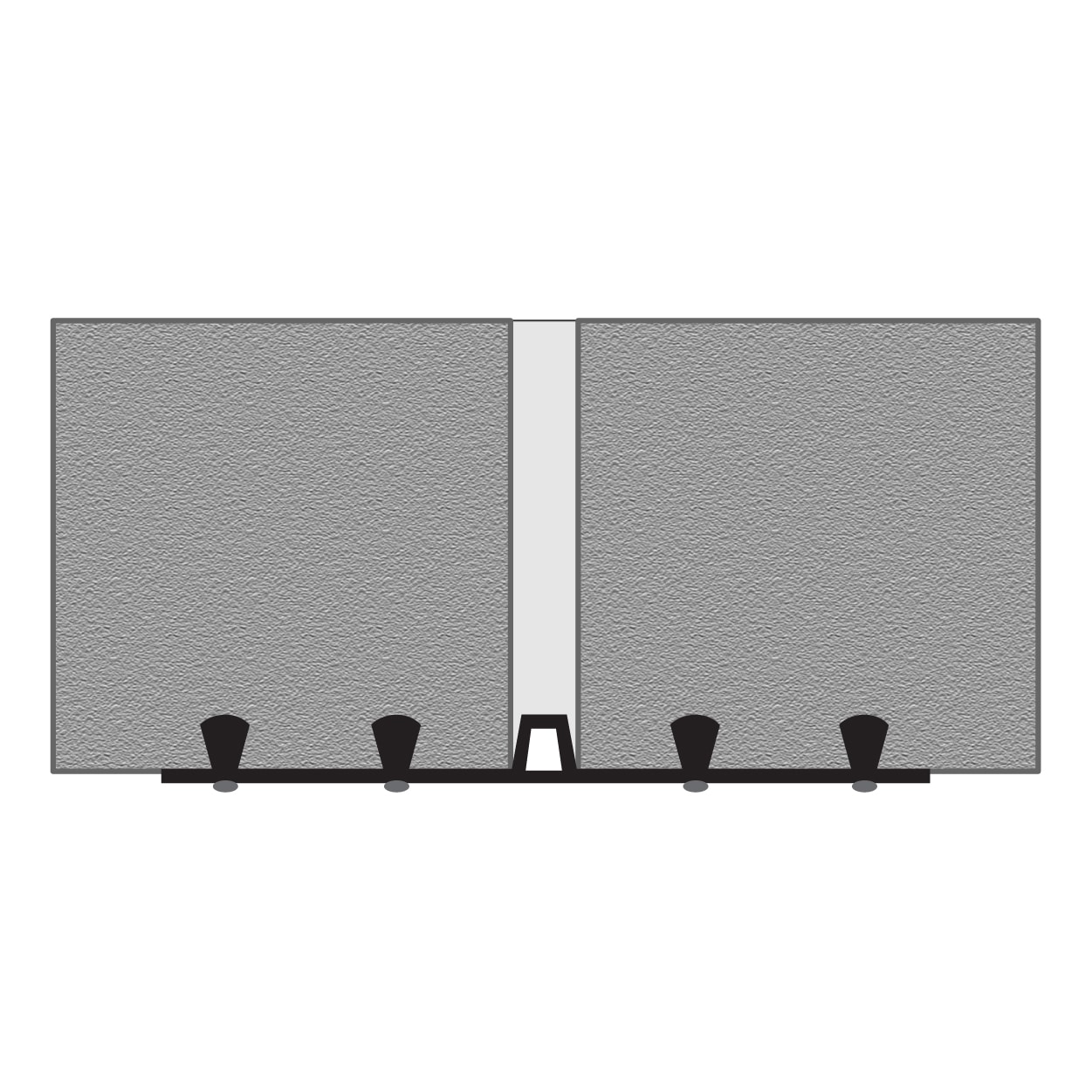
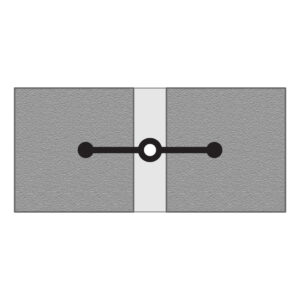
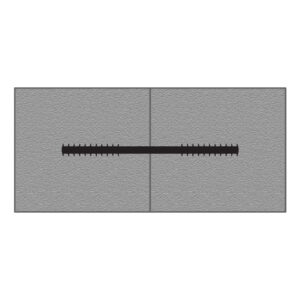
About the Base Seal with Tear Web Profile
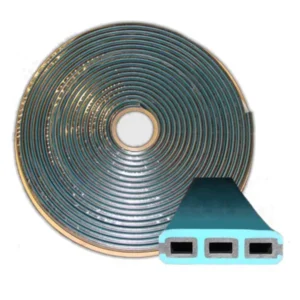
Base seal with tear web waterstops are specified for movement joints where the waterstop is installed along the exterior face of the concrete rather than embedded across the joint. The flat base sits against the form or substrate on the water side of the structure, while the tear web rises over the joint and is engineered to rupture as the joint opens — allowing the U-bulb to deform without placing the PVC in tension. This combination of base seal placement and tear web geometry accommodates lateral, transverse, and shear movement while keeping the waterstop on the positive (water) side of the joint.
Larger tear web bulbs are generally associated with greater joint movement capacity. The base seal configuration is well suited to slab-on-grade joints and backfilled walls, where the waterstop can be positioned against the formwork or earth side and then encapsulated as concrete is placed. Base seal profiles have some limitations with transitions and intersections, so factory-fabricated fittings are particularly important for changes of direction.
Typical Applications
✓Commonly Specified For
- Slab-on-grade movement joints
- Backfilled wall joints with exterior-side waterproofing
- Expansion and contraction joints with significant movement
- Joints subject to lateral, transverse, or shear movement
- Water and wastewater treatment plants
- Reservoirs, tunnels, and containment structures
- Potable water contact applications
- Texas Highway Type A specifications
→Other Profiles May Be Considered When
- The waterstop will be embedded across the joint — see Ribbed Centerbulb or Ribbed Tear Web
- Moderate joint movement with simpler geometry is acceptable — see Base Seal
- The joint has continuous reinforcement and minimal movement — see Flat Ribbed
- The joint is at an existing concrete face — see Retrofit profiles
- Complex transitions and intersections are required throughout the project
Profile selection should always be verified against project specifications and engineering requirements. Contact us if you’d like assistance reviewing options for your application.
Available Sizes & Versions
Sika Greenstreak produces the base seal with tear web waterstop in a single profile configuration.
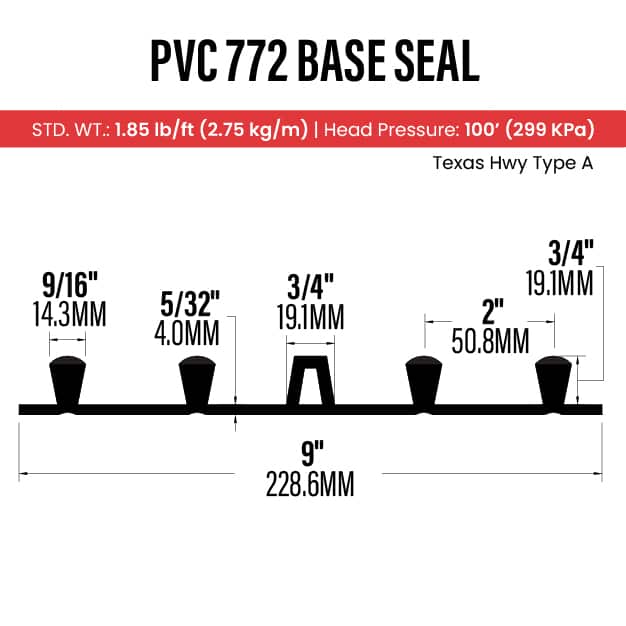
Sizing considerations generally include expected joint movement, hydrostatic head, and concrete cover. Contact us if you’d like help cross-referencing a profile against your spec.
Installation Overview
Base seal with tear web waterstops are installed along the exterior (water-side) face of the concrete rather than embedded across the joint. The flat base is positioned against the formwork or substrate, the tear web is centered over the joint location, and concrete is placed to encapsulate the base. Heat welding is generally the recognized method for splicing PVC waterstop, and factory-fabricated transitions are particularly important for base seal profiles given their limitations at intersections. Always refer to the manufacturer’s installation guide and project specifications for complete instructions.
Position
Lay the flat base against the formwork or substrate with the tear web centered over the eventual joint location.
Secure
Anchor the base to the form or substrate to prevent shifting during concrete placement.
Splice
Heat-weld butt splices in the field. Factory fabrications are strongly recommended for changes of direction.
Pour
Place and consolidate concrete to fully encapsulate the base while keeping the tear web aligned over the joint.